Watercolor Experiments for Beginners: Use a Simple Subject to Explore
Stop trying to paint a masterpiece. Use watercolor to experiment with a simple subject like glue bottles, loosen up, and let the medium do its thing.

Here’s a mindset shift that changed my watercolor: don’t paint with watercolor. Use it to explore and experiment instead.
Pick a simple subject
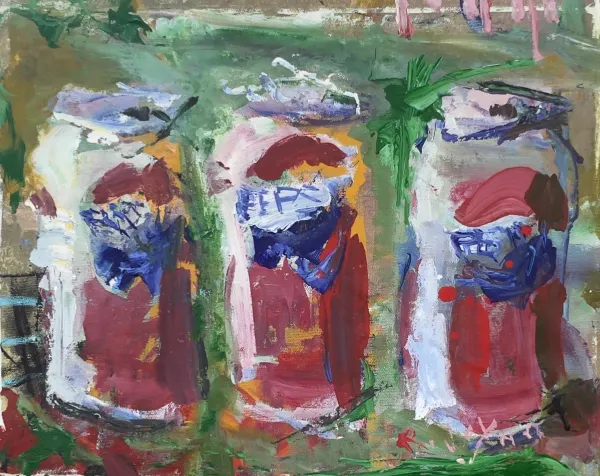
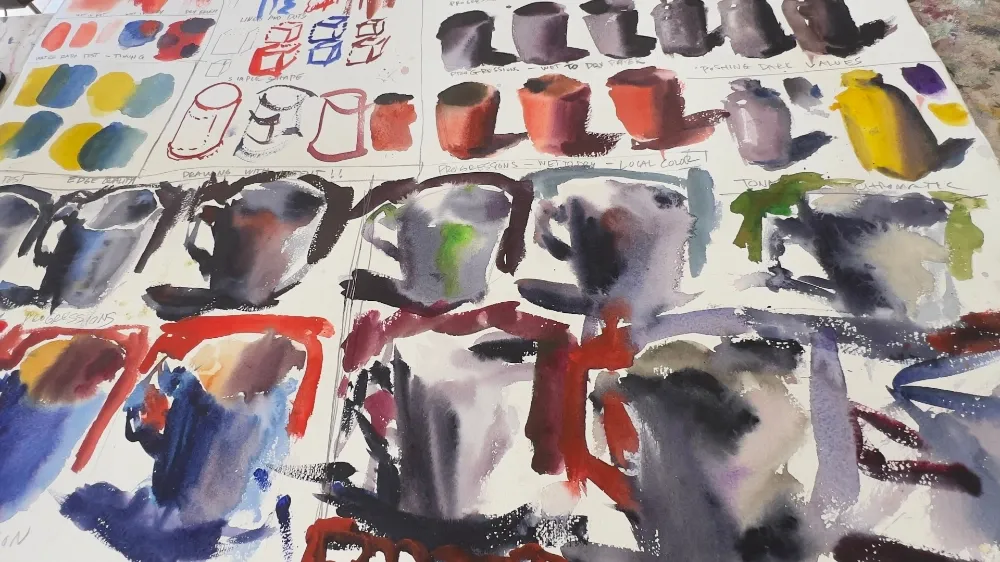
This one’s three glue bottles from my garage. I love simple subjects because they give me freedom to let the watercolor do what it wants. Compare that to “I’m going to paint a beautiful landscape right now.” Totally different place to be.
Try a side-by-side progression
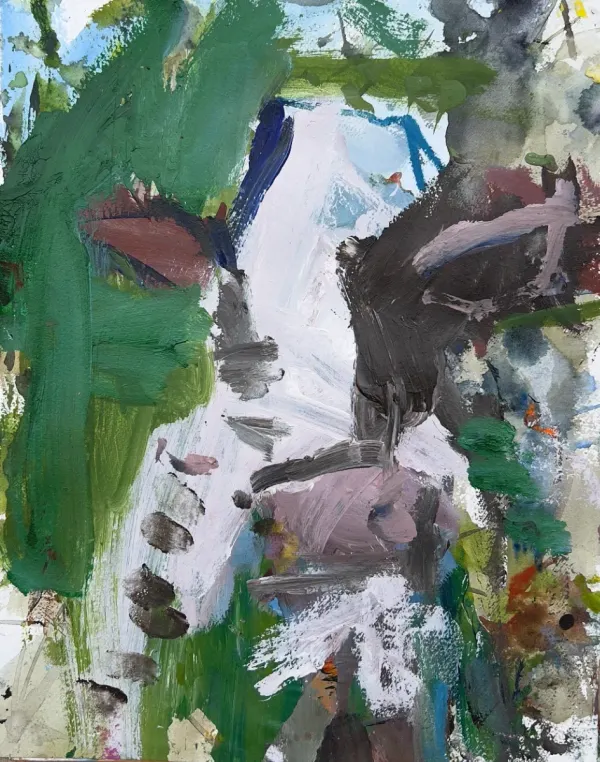
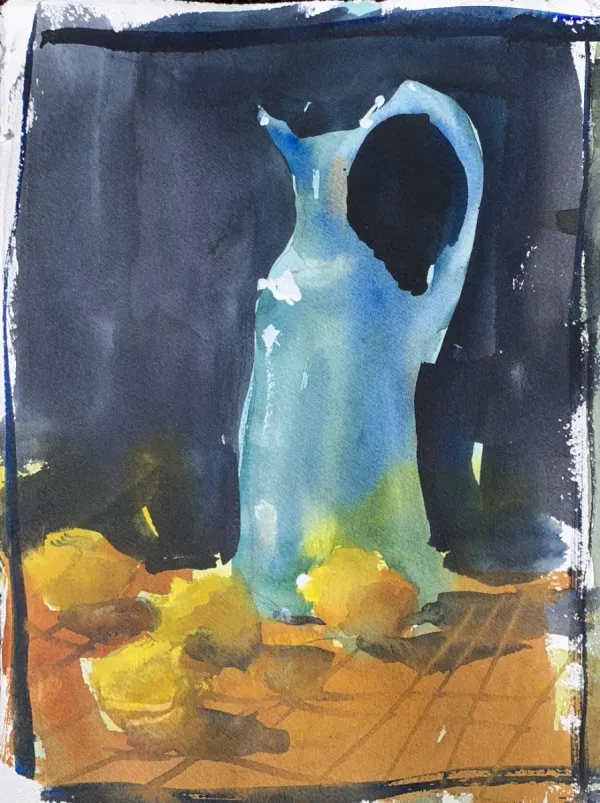
Side-by-side progressions are a great way to loosen up. Paint the same subject a few times, each one a bit different. You don’t have to control every brushstroke. See also loose painting progression exercise.
Want to Paint Loose Watercolors, Slacker? Learn the fundamentals, ditch perfection, and develop your own expressive style.
Mix up your techniques
With no expectations, you can just play:
- Wet-on-wet
- Wet-on-dry
- Thick paint dropped into a wet wash
- Line work with a sword brush and a liner brush
If you want to practice the wet techniques, see wet-on-wet watercolor flowers. For more experiments, try experimental watercolor trees.
Story time: I thought I’d be the next Bob Ross
About 12 years ago, YouTube was still pretty young and I decided to start my own channel. I bought a DSLR, tripod, lights, and a lavalier mic. I spent thousands of dollars and had no idea how to use any of it.
At 5 a.m. I did a quick test, and everything looked and sounded good. So I filmed almost three hours of painting. Then I watched it back, and the mic was popping through every single video. Three hours, unusable.
My wife took one look at me and asked if I was okay. I said, “Not really.” I had no clue how to fix it.
What it taught me
Looking back, I’m glad it happened. Creative work almost never goes the way you planned. The mic fails, the painting fails, the watercolor turns into a reject. You head one direction and end up somewhere completely different. That’s often where the interesting stuff starts.
Train your brain, not just your hand
When you experiment, you’re training your brain to allow freedom instead of being tense and timid. The medium does its thing, then you respond. You also learn how to troubleshoot, because you get into messes and learn how to get out of them.
Once I let go of finished art, my painting changed for the better. More in 10 tips for painting loose.
Learn Structure. Paint Loose.
Construct. Deconstruct. Explore. Repeat.
Watercolor experiment FAQ
What should I paint when experimenting with watercolor?
A simple object nearby, like a bottle, jar, or tool. The subject doesn’t matter.
What is a side-by-side progression?
Painting the same subject multiple times, changing your approach each time.
How do I stop being tense with watercolor?
Remove the goal of a finished piece. Play first, judge later.
Do I need special brushes?
No. A sword brush and liner brush help for line work, but any brushes will do.