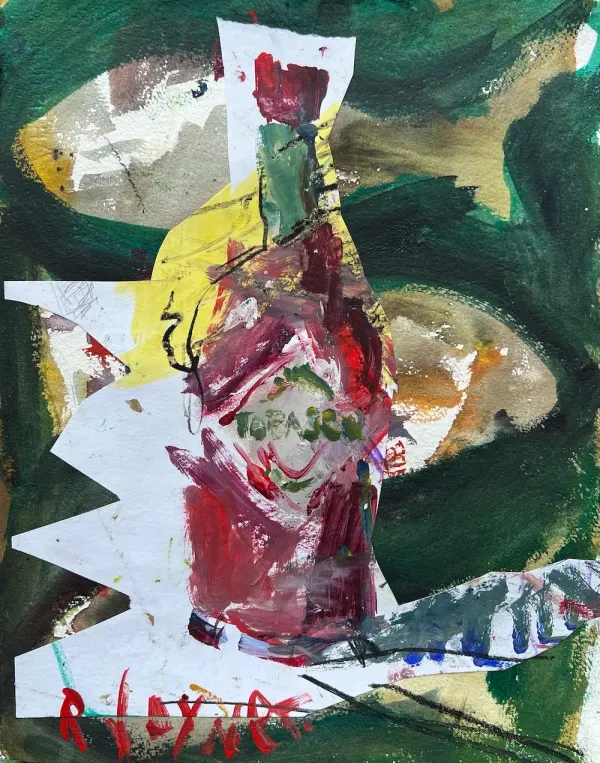
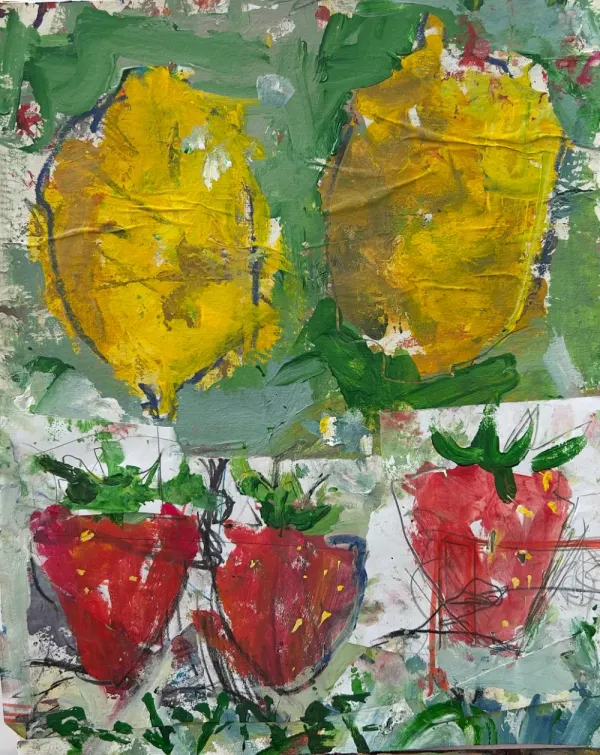
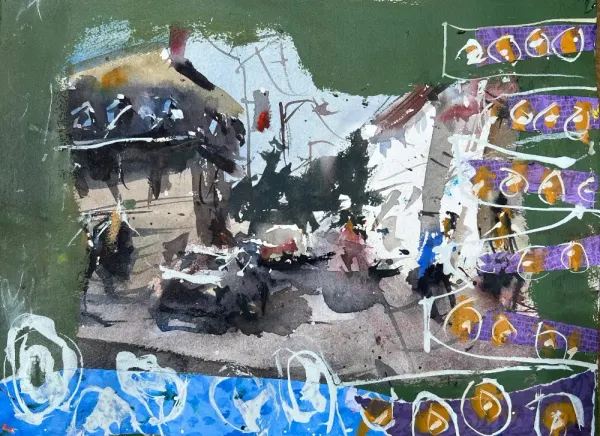
Loose Painting Progression: Paint One Subject From Tight to Loose
Try a loose painting progression. Paint one subject in acrylic, then push each version further from control with splashes, a palette knife, and new colors.

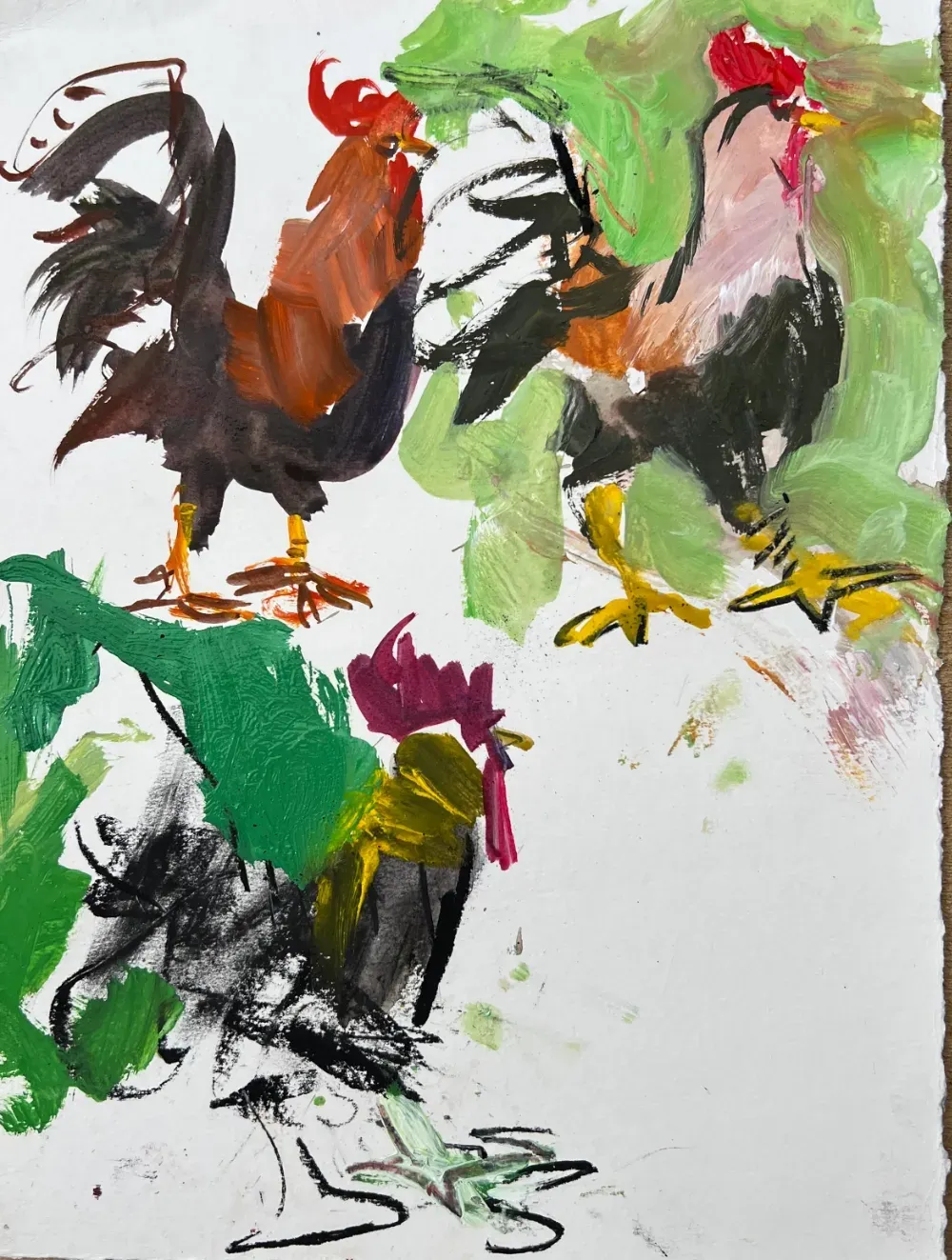
It’s got to fall apart. That’s the whole point.
In this loose painting progression, I paint the same subject several times, starting simple and recognizable, then pushing each version further from control. The subject is a rooster, in acrylic and mixed media.
Start with a simple acrylic sketch
Even my “tighter” rooster is probably loose to a lot of people, and that’s fine. The first pass matters because it gives me something to respond to.
I move quickly and keep the brush dancing across the surface. The goal is to get the idea down before my brain starts trying to perfect everything.
Interrupt the process
When I move into the second version, things begin to change. I might:
- Throw down random splashes of acrylic first
- Smear paint around with a palette knife
- Use awkward colors
- Pick bigger brushes
- Switch mediums
The point is to shake yourself out of your routine. We’re not making polished finished art. We’re exploring new ways to express the same subject.

Want to Create Loose Mixed Media Art, Slacker? Learn the fundamentals, experiment with collage and layers, and develop your own expressive style.
Push until it breaks apart
If you push far enough, the painting starts to break apart, and that’s where it gets interesting. That sounds easier than it is, especially if you’ve painted one way for years. Art is physical: your hand learns movements and your brain learns expectations.
So part of this is expanding your physical range of motion. See loosen up your drawing for tool-switching ideas. The bigger challenge is expanding your visual comfort zone: can you see beauty in something imperfect, and accept looseness, gesture, distortion, and chaos?
Live with the work
Put it on the wall or the fridge, or use it as a screen saver. Get used to seeing your art in a raw, expressive state. Eventually you realize the imperfections hold energy, emotion, movement, and freedom, and that changes how you paint.
For related ideas, see draw it first, then loosen up, why loose painting takes practice, and embracing imperfect art.
Try it yourself
- Pick a simple, recognizable subject.
- Paint it quickly in acrylic, without overthinking.
- Paint it again, interrupting your habits with splashes, a palette knife, or awkward colors.
- Repeat, pushing further each time.
- Hang them all up together.
Learn Structure. Paint Loose.
Construct. Deconstruct. Explore. Repeat.
Loose painting progression FAQ
What is a painting progression?
Painting the same subject several times, starting recognizable and pushing each version looser than the last.
How do I make my acrylic paintings looser?
Interrupt your habits: splash paint first, use a palette knife, try odd colors, and use bigger brushes.
What subject should I use?
Anything simple and recognizable, like a rooster, fruit, or a cup.
How many versions should I paint?
Three is a good start: one simple, one looser, and one that starts to fall apart.