MIXED MEDIA PROGRESSIONS — THE DECONSTRUCTION LAB
You’ve Been Throwing Away Your Best Starting Points.
Learn to combine watercolor, acrylic, graphite, charcoal, crayon, and ink — and turn abandoned paintings, failed experiments, and old sketches into the foundation for something new.
INCLUDED WITH YOUR LAB MEMBERSHIP
All 5 courses + ongoing Lab Journal studio lessons.
What You'll Learn
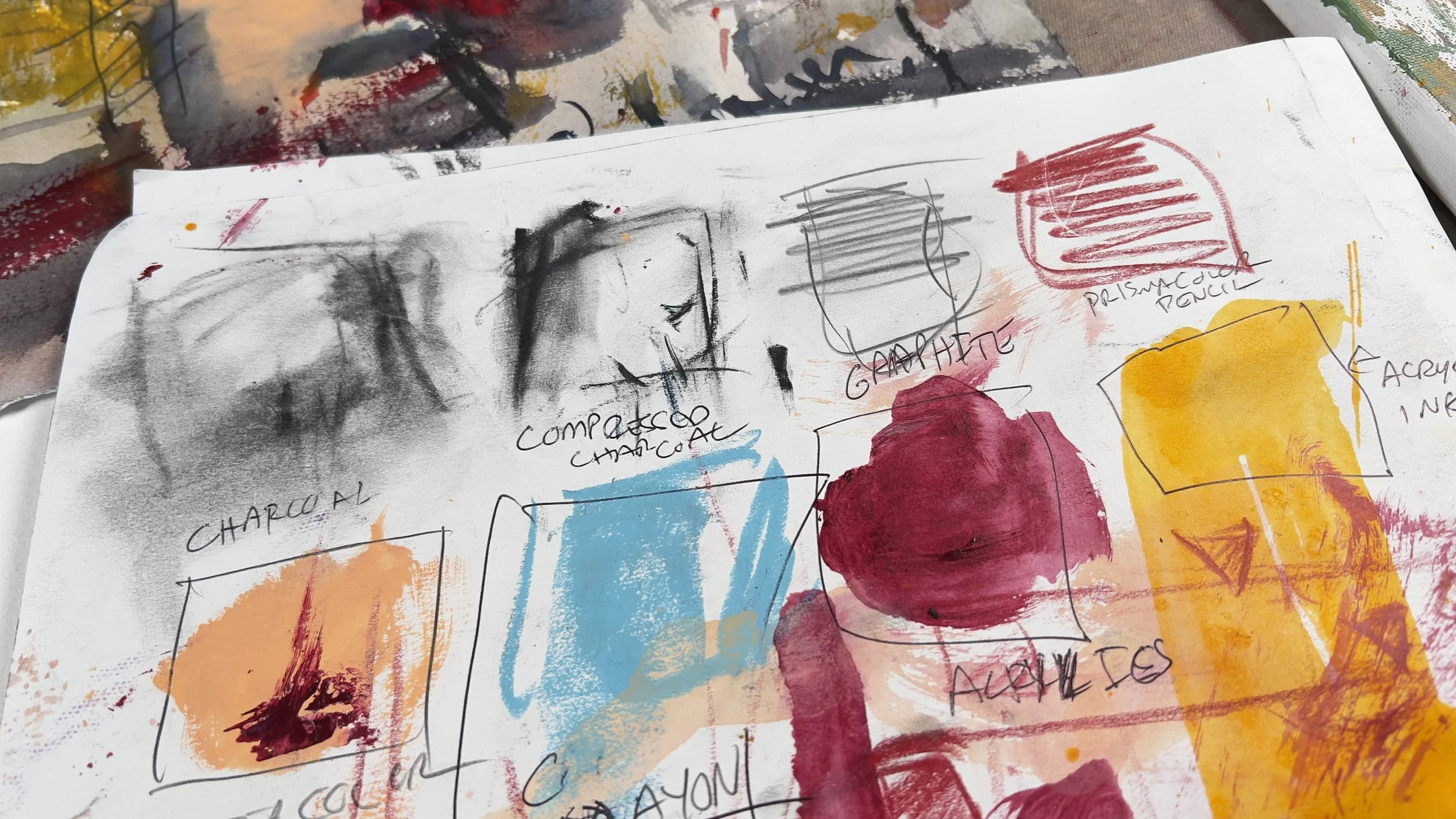
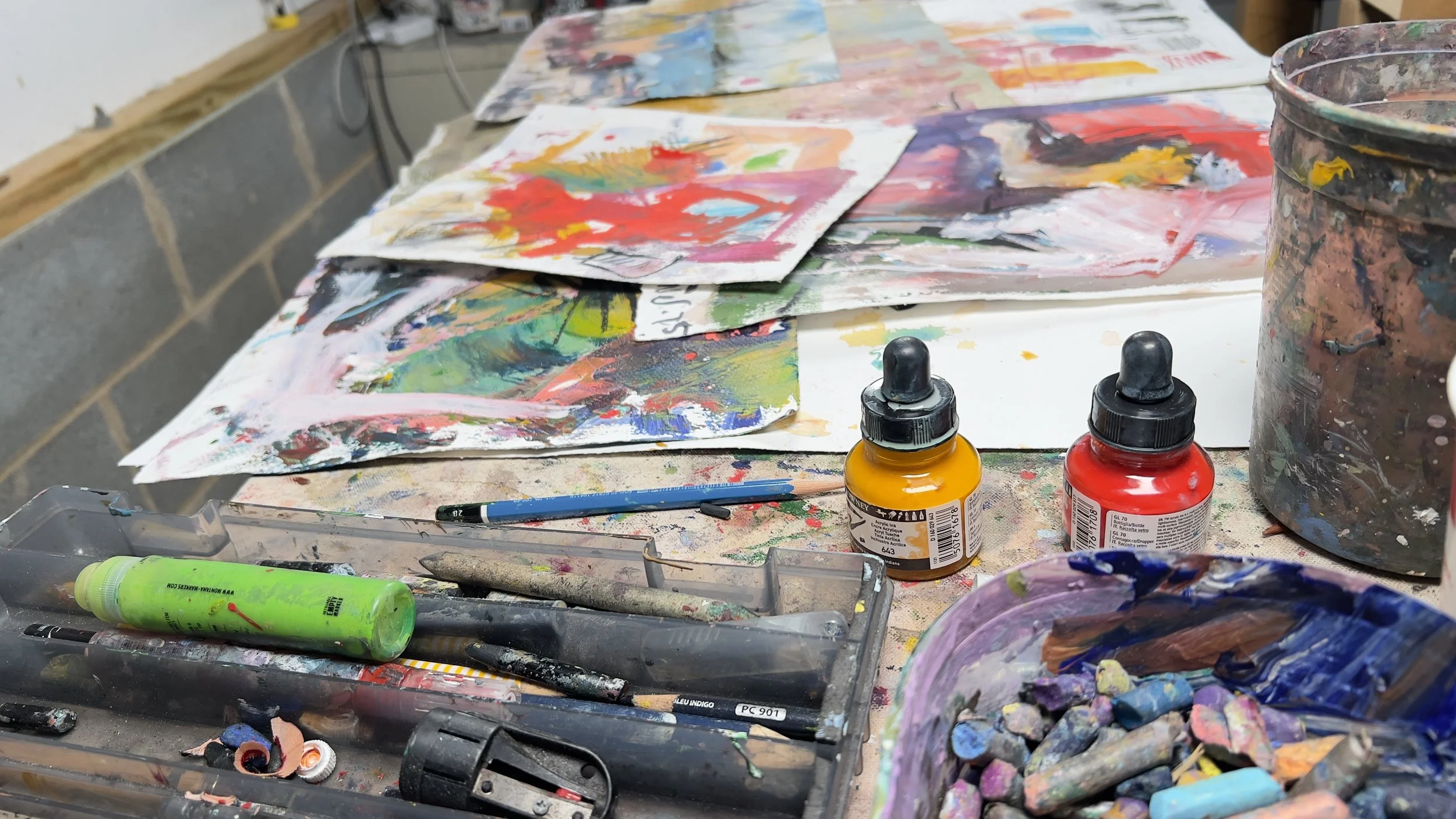
How graphite, charcoal, watercolor, acrylic, crayon, and ink each behave — and how they behave differently depending on the surface underneath
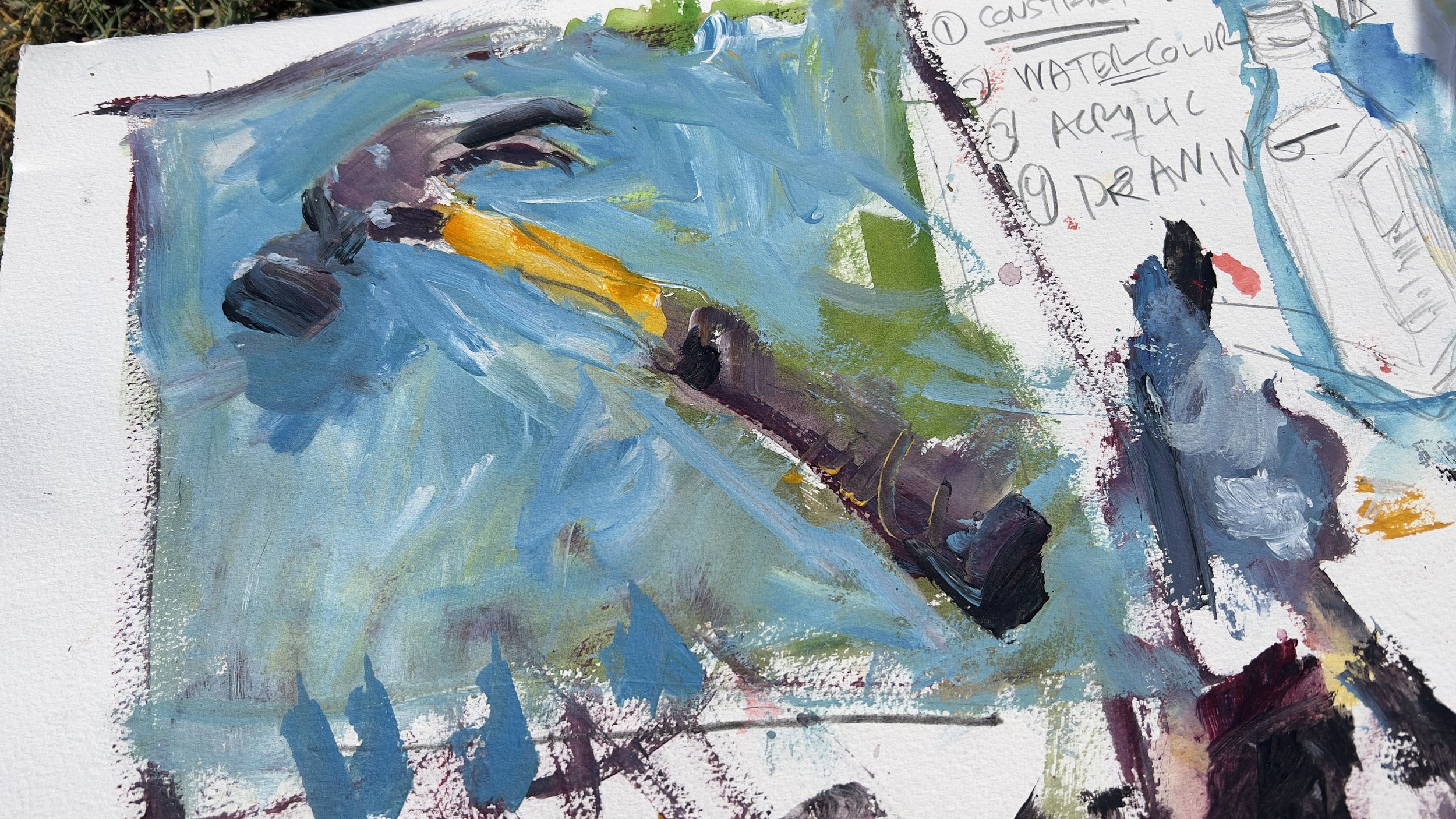
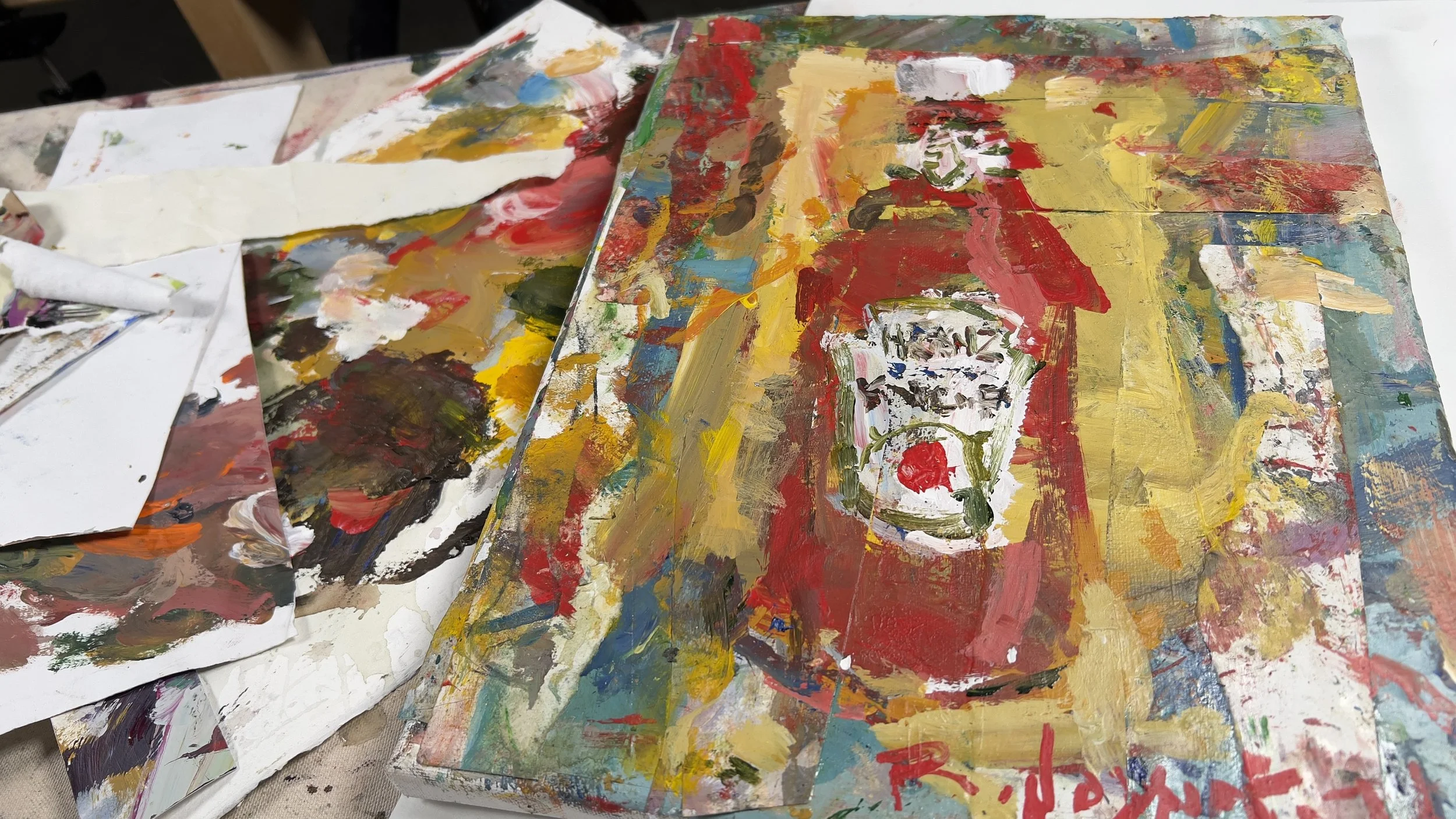
How to build a piece in layers where the drawing underneath still shows through the paint on top
How to work without a fixed sequence — starting with any medium and responding to the surface as you go
Transparency and opacity as design decisions — when to let a layer show through and when to cover it completely
Resist — how crayon or oil pastel under a wash creates texture no other technique can produce
How to look at an old reject and see what it's already doing right — then build on that instead of starting over
How to generate raw material on purpose — texture sheets, color fields, torn scraps — and turn them into a finished collage piece
Who This Is For
This course is for the artist who has a drawer full of paintings they're not happy with. The watercolor painter who keeps getting frustrated with control. The acrylic painter who wants to loosen up. The sketcher who's ready to see where a drawing can go once paint enters the picture.
You don't need to be equally skilled in every medium. You need one thing: a willingness to layer on top of what didn't work instead of throwing it away.
This is the seventh and final course in the Deconstruction Lab foundation cycle — the place where everything you've learned about structure, value, and composition converges into one expressive, layered practice.
Where this course fits
Five courses, one path.
Drawing Fundamentals: Structure is the permission slip. This is where you build it.
Drawing Is Everything: You don't have a drawing problem. You have a thinking problem.
Design & Composition: Most painting problems aren't paint problems. They're composition decisions you never made.
Value & Color: Most painting problems aren't color problems. They're value problems.
Acrylic Progressions: This one teaches you how to think with paint.
Bonus Lab Courses
Watercolor Progressions: Watercolor isn't fragile. This course proves it.
Mixed Media: The most open, most spontaneous course in the Deconstruction Lab. (You are here)
Learn the complete system. Keep applying it through a new studio lesson every other week.