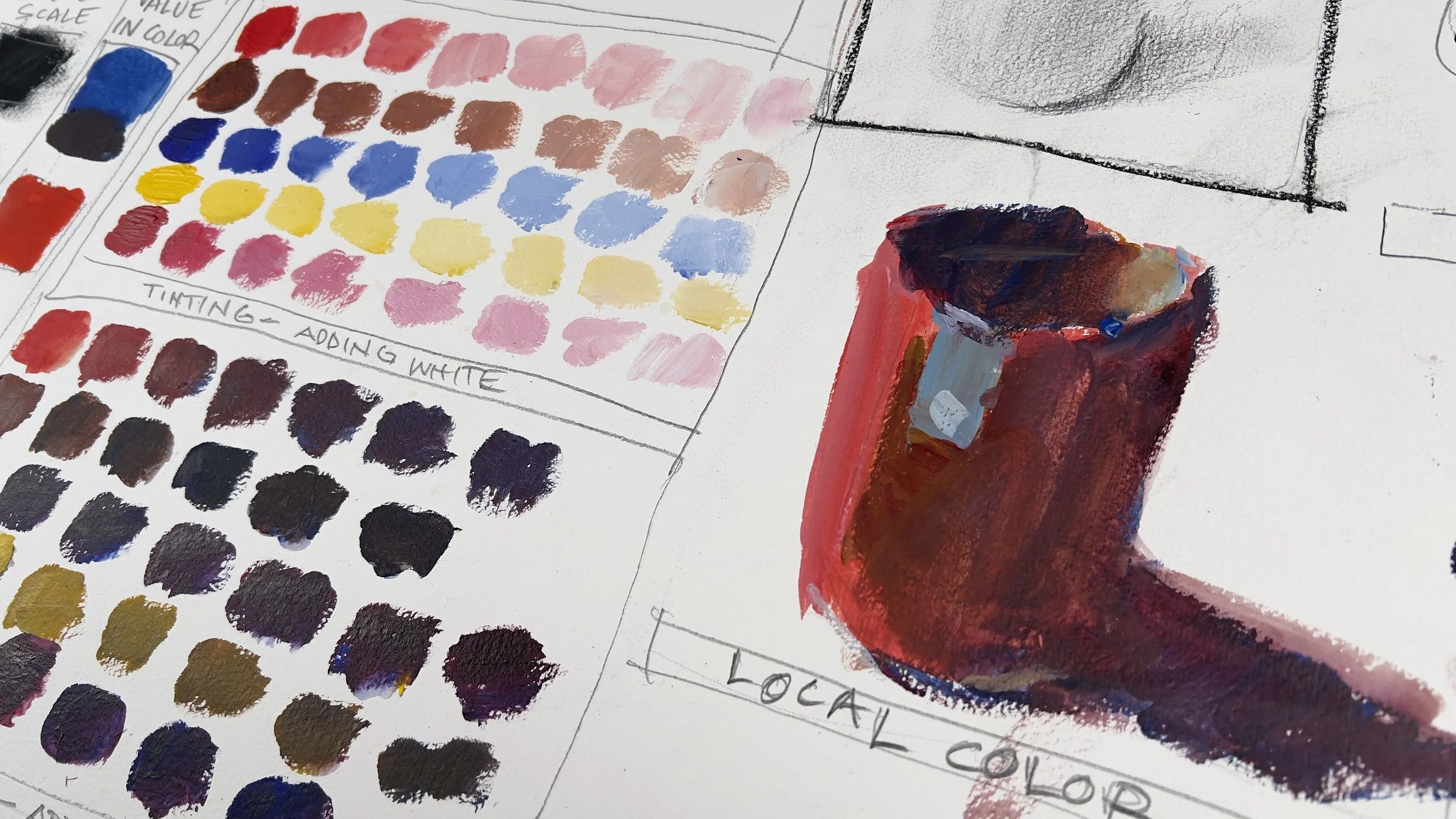
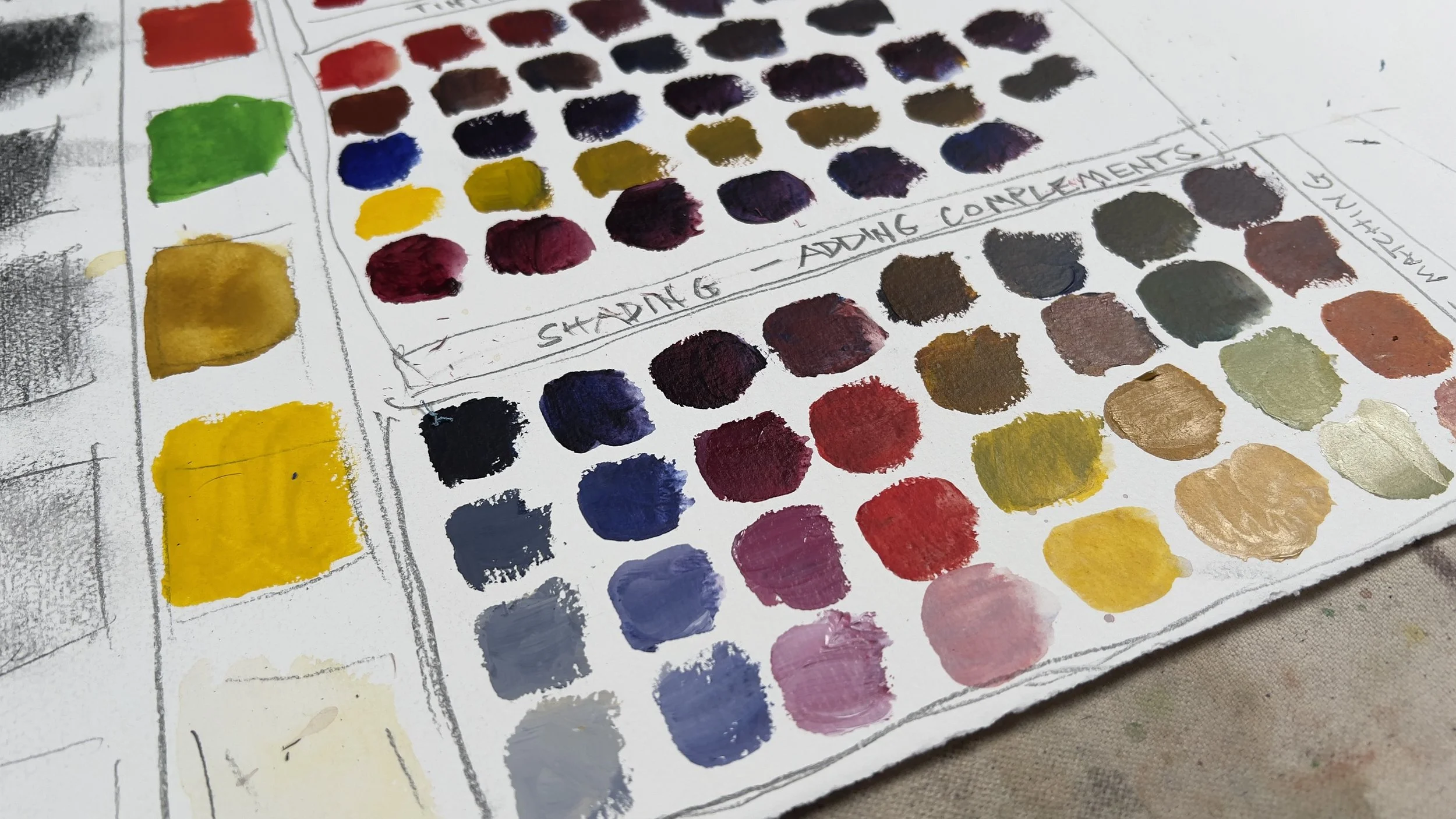
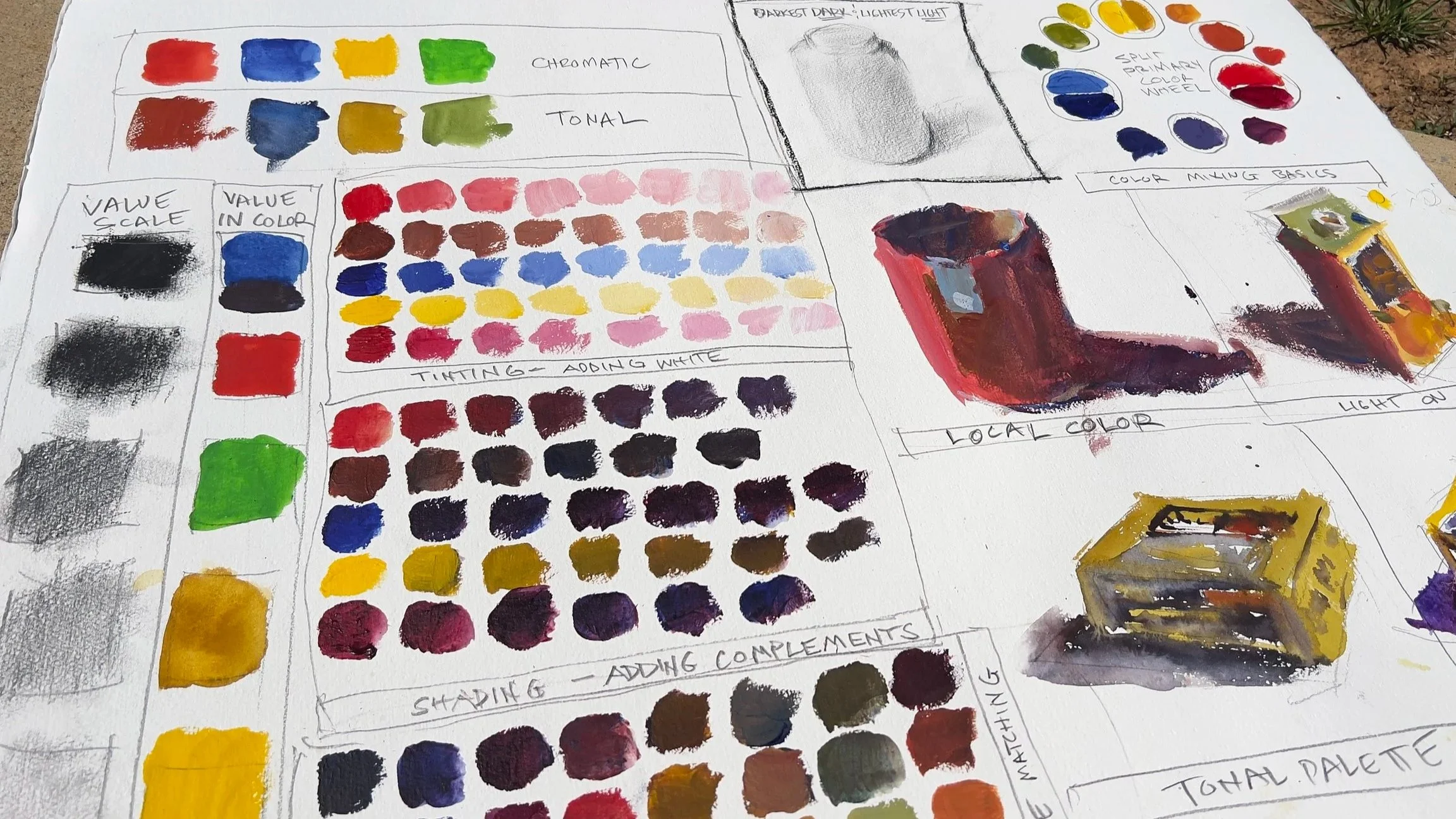
Your color work isn't a color problem.

It's a value problem. And this course fixes that.

Most artists spend years chasing the right color. The perfect mix. The exact hue. And most of them end up with flat, muddy paintings they can't figure out.

Here's the truth: your eye reads value first. Light and dark. Always. Color is just the accent.

Get the values right and you've got enormous flexibility with everything else — including color.

That's what this course is built on.

What You’ll Learn

  • How to build and use a value scale

  • Where your colors actually sit on that scale

  • How to tint and shade without killing your color

  • The split primary palette and why it matters

  • Tonal vs. chromatic painting — two lanes, two completely different results

  • How to paint light on form using any medium
This course is part of the Deconstruction Lab ecosystem.

Value & Color builds directly on the system taught in the foundation courses. Before diving in, here's what's recommended:

Highly Recommended

  • Drawing Is Everything — the core philosophy and progression system. Referenced throughout this course.

  • Values & Color — value structure and the tonal vs. chromatic system are used extensively in every section. (You Are Here)

  • Design & Composition - Pre-painting decisions. The blueprint. What goes where and why.

New to art or drawing?

  • Drawing Fundamentals — start here before anything else. Covers observation, line, mark making, and structural drawing from the ground up.


The Deconstruction Lab

A complete foundation pathway

  1. Drawing Is Everything - The philosophy. Everything builds on top of this. You don't have a drawing problem. You have a thinking problem.

  2. Drawing Fundamentals - Structure is the permission slip. This is where you build it.

  3. Values & Color - Most painting problems aren't color problems. They're value problems. This fixes that. (You Are Here)

  4. Design & Composition - Most painting problems aren't paint problems. They're composition decisions you never made.

  5. Watercolor One: Loose On Purpose - Watercolor isn't fragile. This course proves it.

  6. Acrylic One - Most acrylic courses teach you how to finish a painting. This one teaches you how to think with paint.

  7. Mixed Media One (Coming Soon)

Materials List

NOTE: You can use one medium. In the course I used watercolor and acrylics along with standard drawing materials.

Watercolor materials:

Paints — Holbein

  • Alizarin Crimson

  • Cadmium Red Light

  • Cadmium Yellow

  • Yellow Ochre

  • Ultramarine Blue

  • Cobalt Blue

  • Neutral Tint

  • Burnt Sienna

Brushes

  • Medium pointed round

  • Sword brush

Palette

  • John Pike palette (or any large well palette)

Paper

  • 140lb cold press — full sheets recommended

Everything Else

  • Two water reservoirs (one clean, one dirty)

  • Paper towels or an old rag

Full materials list with links available on the website

Acrylic materials:

Paint
Heavy body acrylic only — any brand works, but heavy body is important.

  • Ultramarine Blue

  • Cerulean Blue

  • Alizarin Crimson

  • Cadmium Red Medium

  • Cadmium Yellow Light

  • Yellow Ochre

  • Titanium White

Brushes

  • Medium Round

  • Small Round

  • Liner / Rigger Brush

  • Medium Flat

  • Large Flat

Surfaces

  • 2 sheets 140lb Cold Press Watercolor Paper

Other

  • Scrap cardboard (palette)

  • 3 water reservoirs

  • Palette knife (for scooping paint)

Full materials list with links available on the website