How to Paint a Horse Loosely: Acrylic, Charcoal & Mixed Media
Learn how to paint a horse loosely with acrylic, charcoal, and watercolor. Focus on rhythm and movement, then simplify, lose edges, and let the painting breathe.
Want to paint horses without getting lost in every muscle? Start with movement.
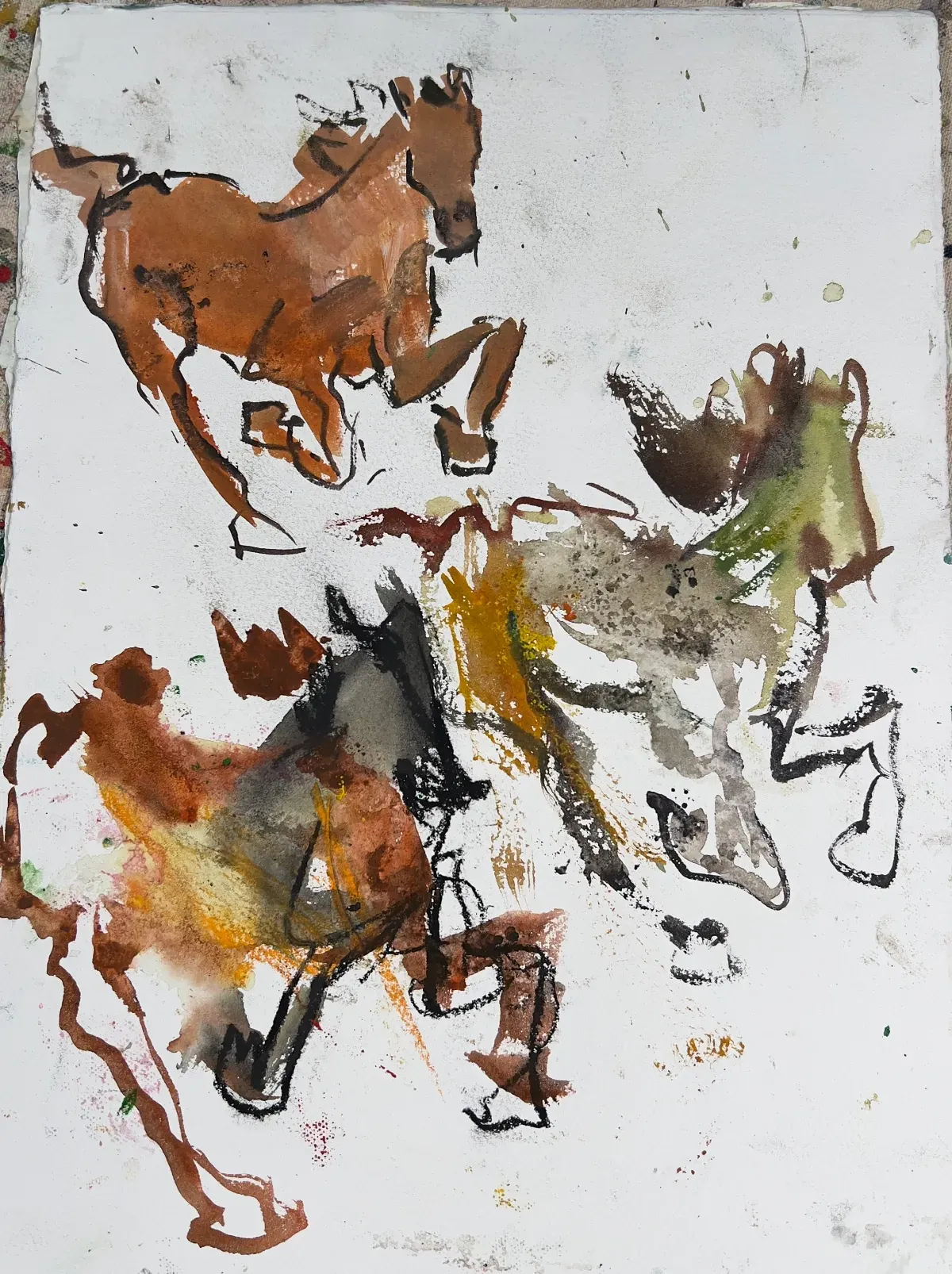
In this loose horse painting, I use acrylic, charcoal, and watercolor to explore the subject through rhythm, line, and layers.
Start with structure and movement
I begin with acrylics, establishing structure and movement before worrying about details. I’m not painting every muscle or feature. I’m looking for rhythm, balance, and energy, something to build on.
Once I’m familiar with the subject, things start to loosen up.
Loosen up as you go
From there I can:
- Push the brushwork more
- Simplify shapes
- Lose edges
- React to the painting instead of controlling every mark

Want to Create Loose Mixed Media Art, Slacker? Learn the fundamentals, experiment with collage and layers, and develop your own expressive style.
Add mixed media
As the layers build, I bring in other materials: a little charcoal, rough line work, broken shapes, and accidental textures. Some marks feel heavy and bold, others soft and atmospheric.
Color adds to the exploration too. Warm browns and tans against cooler grays and greens create tension and variety without a lot of detail.
The process matters more than the horse
This isn’t about painting a perfect horse. It’s about exploring the subject through movement, line, brushwork, layers, and experimentation. The structure is still there underneath, but once the foundation is in place, I can relax and let the painting breathe.
Why a progression helps
By the final piece, the earlier studies and warm-ups pay off. Progressions help you loosen up and connect more deeply to your subject. You see the shapes differently, understand the movement, and learn how your materials respond.
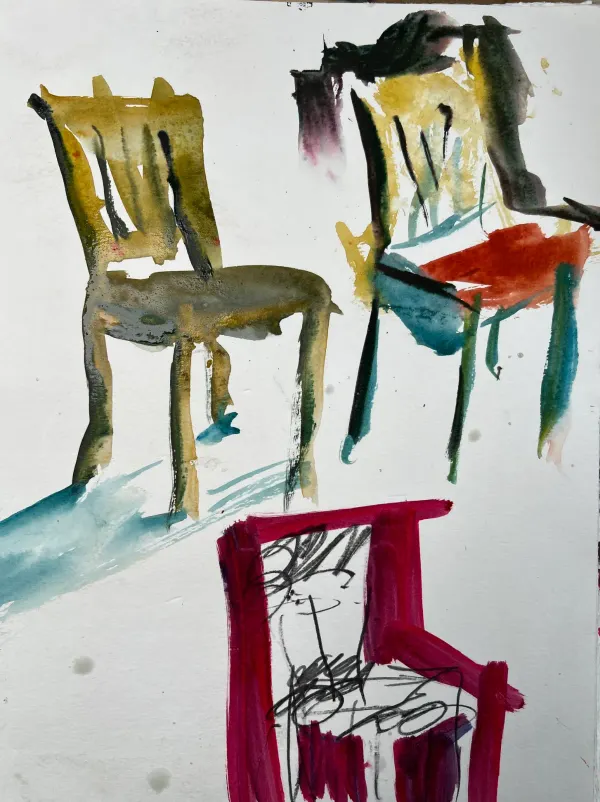
If you’ve never experimented much, throw the kitchen sink at it: acrylics, charcoal, loose line work, watercolor, graphite. For other progression exercises, see tight to loose with a rooster and the chair painting exercise.
Try it yourself
- Pick a moving subject (a horse works great).
- Start with an acrylic study focused on rhythm and balance.
- Do a second study, simplifying shapes and losing some edges.
- Add charcoal, watercolor, or graphite on top.
Learn Structure. Paint Loose.
Construct. Deconstruct. Explore. Repeat.
Loose horse painting FAQ
How do I paint a horse loosely?
Start with movement and big shapes, not details. Simplify, lose edges, and add line work on top.
What materials work for loose horse painting?
Acrylic, charcoal, watercolor, and graphite all work. Mix them on the same page.
Do I need to know horse anatomy?
It helps, but loose work focuses on rhythm and gesture. Studies teach you the structure over time.
How many studies should I do?
Three or four. Each one should get looser than the last.