Wet-on-Wet Watercolor Bananas: A Loose Progression Exercise
Practice loose wet-on-wet watercolor with bananas. Paint four studies, leave the first unfinished, and learn to scrub out and blot when a wash goes wrong.

Want to practice wet-on-wet watercolor without pressure? Paint a bunch of bananas, then paint them again.
This progression exercise is all about loose wet-on-wet techniques: letting the paint move and react on the paper instead of controlling every edge.
What wet-on-wet gives you
With this approach it’s not about controlling every edge or shape. It’s about movement, color relationships, soft transitions, and unexpected moments, and wet-on-wet gives you plenty of those. If you want a refresher on the basics, see wet-on-wet watercolor flowers.
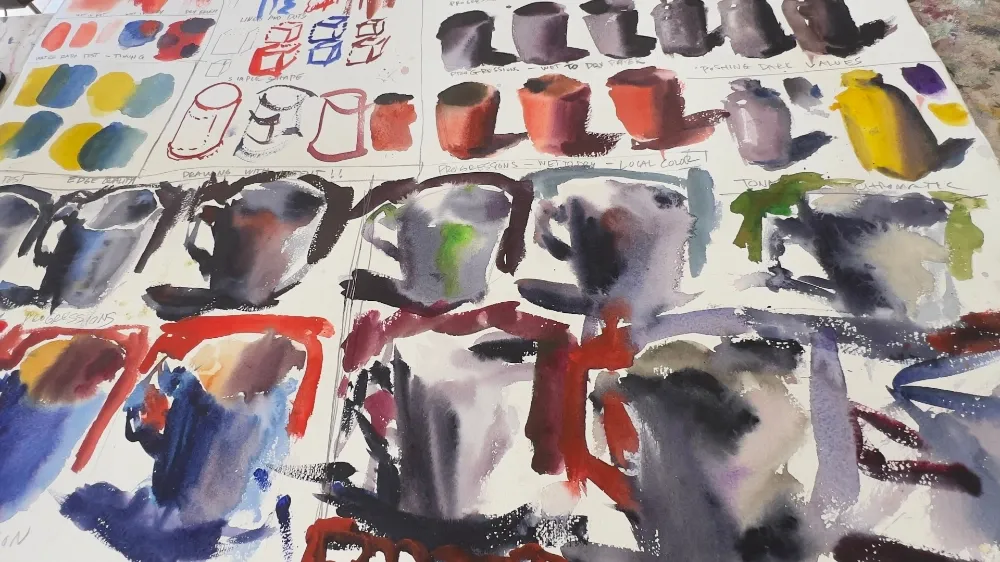
Want to Paint Loose Watercolors, Slacker? Learn the fundamentals, ditch perfection, and develop your own expressive style.
Make the first study unfinished
Here’s a reminder I give myself: make the first progression unfinished. Don’t push it too far. Get it started, get it going, then back away. Less is best, and overpainting is what you don’t want here.
Get a little looser each time
As you move through each banana study, you get more familiar with the subject. You also get more comfortable with the timing of the water, your brushwork, and how far you can push before things fall apart (that comes later, I promise).
Each progression gets a little looser. Sometimes I take liberties with shapes. Sometimes I take liberties with values, pushing, pulling, and lightly suggesting them instead of overstating.
Use progressions as a sandbox
A progression becomes a sandbox for technique, color, or anything that helps you break away from the ordinary. It’s a chance to push boundaries and try something new.
When a study goes wrong: scrub, blot, and go back in
On one study, I didn’t like where things were going. Instead of fighting it, I took a bristle brush with water and scrubbed part of it back out. Then I blotted it with a paper towel and went right back into the painting while the paper was still wet.
Those moments often become the most interesting parts of the process. You stop forcing perfection and start reacting intuitively.
Why the goal isn’t one perfect painting
Sometimes the goal is simply loosening up, experimenting, and staying connected to the creative process a little longer.
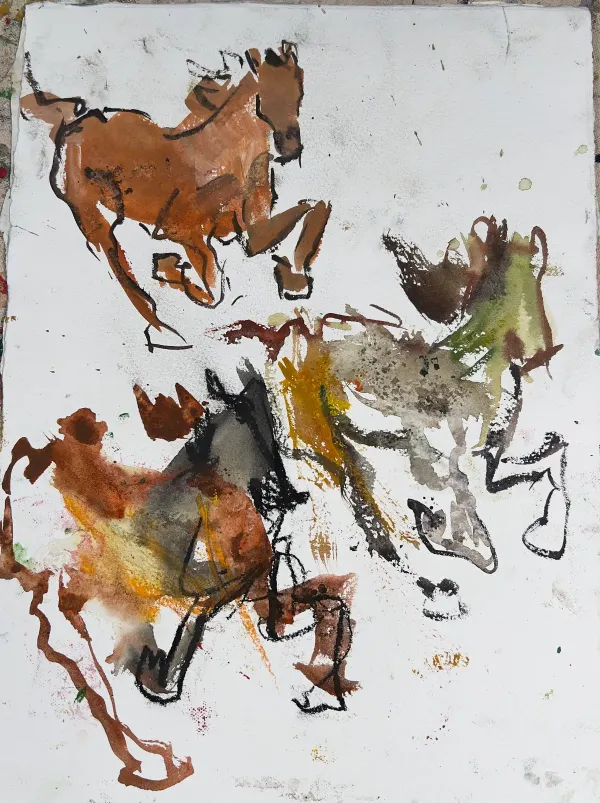
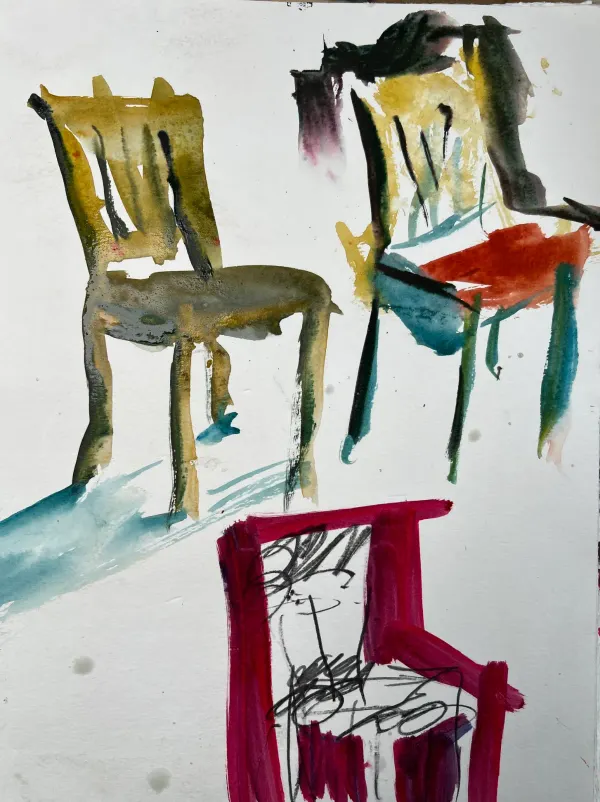
For other progressions, see chair painting exercise, loose horse painting, and the drawing version, banana drawing exercise.
Try it yourself
- Paint a bunch of bananas loosely wet-on-wet. Leave it unfinished.
- Paint it again, a little looser, with different colors.
- Repeat for four studies.
- If one goes wrong, scrub it out with a bristle brush, blot, and keep going.
Learn Structure. Paint Loose.
Construct. Deconstruct. Explore. Repeat.
Wet-on-wet watercolor FAQ
What is wet-on-wet watercolor?
Painting onto wet paper or wet paint so colors mingle and edges soften.
How do I fix a wet-on-wet painting that’s going wrong?
Scrub the area with a bristle brush and water, blot with a paper towel, and paint back in while the paper is still wet.
Why leave the first study unfinished?
It keeps you from overpainting and gives you room to loosen up in later studies.
Why paint bananas?
They’re simple, curved, and forgiving, so you can focus on water and color.