Mixed Media Flower Painting: Acrylics, Collage & Loose Brushwork
Learn mixed media flower painting using acrylics, collage paper, and a rejected painting. Explore bold color, loose brushwork, and expressive layers.


Who says a rejected painting belongs in the trash, bro?
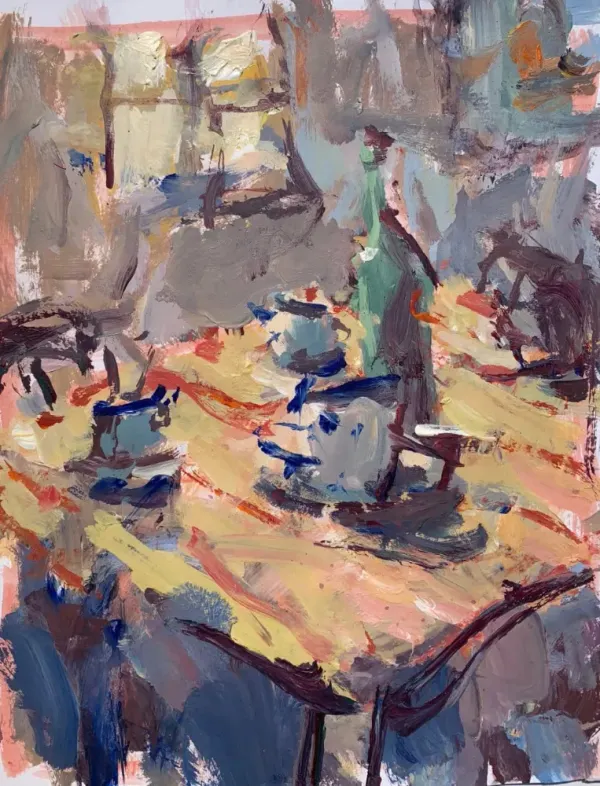
In this free mixed media flower painting tutorial, I'm taking an old 11 × 15-inch painting on watercolor paper and turning it into a colorful floral still life using acrylics, collage paper, and expressive brushwork.
No perfect reference photograph. No carefully arranged bouquet. Just an opportunity to explore color, shapes, textures, and layers.
And that's where the fun begins.
Start With a Reject, Not a Blank Page
The foundation for this painting is a piece of watercolor paper covered in leftover acrylic paint.
Instead of wasting paint at the end of a studio session, I often smear it onto scrap paper and save those sheets for future experiments.
For this painting, I introduce a piece of patterned collage paper that eventually becomes part of the vase.
The goal isn't to hide the original surface. It's to use what's already there and build something interesting around it.

Layer, tear, and experiment. Short, exclusive lessons and full courses on mixed media and collage.
Establish the Flowers With Bold Color
I begin with a bright red flower that becomes the focal point of the composition.
From there, I introduce purples, yellows, whites, and touches of pink.
Rather than painting specific flower varieties, I'm working with simple shapes and color relationships.
That freedom allows the painting to develop naturally without getting trapped in unnecessary details.
Contrast Thin and Thick Acrylic Paint
One of the important techniques in this demonstration is varying the thickness of the paint.
I use thinner acrylic layers in the background to create subtle changes in value and color.
For the flowers, I switch to thicker, more opaque paint.
This contrast helps the flowers stand out while allowing the background to remain loose and expressive.
Let the Collage Become Part of the Painting
The patterned collage paper gives the vase an unexpected decorative quality.
As I add acrylic paint, I deliberately leave portions of that pattern visible.
Why introduce collage if you're going to cover every inch of it?
Let the materials work together. Sometimes the most interesting passages are the ones you didn't paint.
Build Layers Without Overworking
Once the first stage is dry, I return with additional stems, foliage, shadows, and highlights.
Working over dry layers gives me the freedom to make adjustments without disturbing everything underneath.
I also introduce subtle color shifts, negative-space painting, finger smudging, splattering, and a little compressed charcoal for linear texture.
Each addition has a purpose, but not every shape needs to be explained.
Know When to Stop
Here's one of the biggest lessons in loose painting:
You don't have to finish every detail to finish the painting.
A few convincing edges, strong color relationships, and recognizable shapes can do plenty of heavy lifting.
Leave some mystery.
Leave some unfinished passages.
Give the viewer something to discover.
Watch the Mixed Media Flower Painting Tutorial
Follow along as I transform an old painting into a loose floral still life using acrylics and collage.
The demonstration runs approximately 16 minutes and covers the painting process from the initial layers through the final expressive touches.
Construct. Deconstruct. Explore. Repeat.
And remember, bro — if you ain't exploring, your art is boring.