Loose Figure Painting Demo (Stop Overthinking Your Art)
Learn loose figure painting with watercolor, acrylics, gesture drawing, and expressive brushwork. Discover how structure creates artistic freedom.
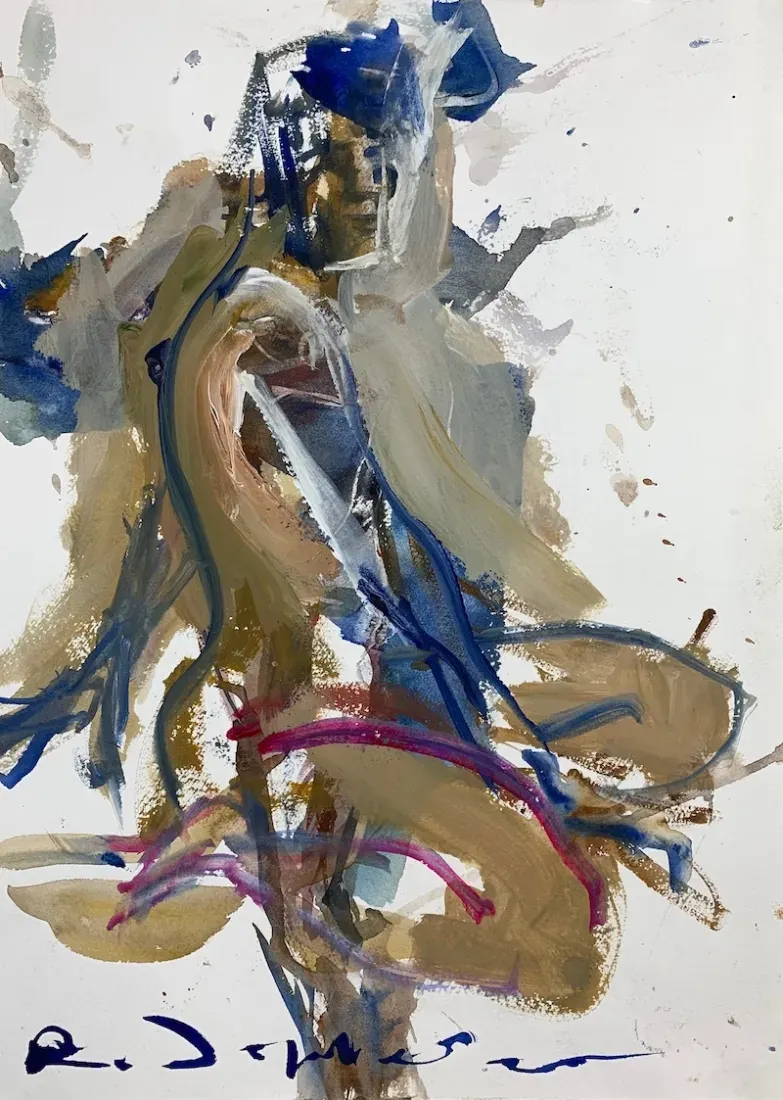
Want to paint loose, expressive figures without getting tangled up in every little anatomical detail?
Well, here's the deal, bro. Loose figure painting doesn't mean abandoning structure.
In fact, the better you understand how a figure is constructed, the more freedom you have to simplify, exaggerate, and experiment.
In this abstract figure painting demonstration, I'm using watercolor, a little acrylic paint, and expressive brushwork to capture a seated figure without getting overly precious about the details.
Start With Gesture, Not Anatomy
I'm working on 123 lb Canson drawing paper using watercolor paints and a touch of titanium white matte acrylic.
Rather than carefully outlining the entire figure, I begin with a simple gesture line describing the curve of the back.
From there, I establish the position of the legs.
These early marks are important because they communicate the overall movement and attitude of the pose.
I'm thinking about how the figure is sitting, where the weight is distributed, and how the different parts connect.
Get that right, and you have something solid to build upon.

Layer, tear, and experiment. Short, exclusive lessons and full courses on mixed media and collage.
Treat Your Paintbrush Like a Drawing Tool
One of my favorite approaches to loose figure painting is to think of the brush as a drawing instrument.
Some marks are thin and delicate. Others are bold, chunky, and unpredictable.
For this demonstration, I'm using a pointed round brush and a half-inch Princeton Neptune sword brush.
The sword brush is particularly useful because it produces such a wonderful variety of marks.
A light touch creates narrow lines, while applying more pressure produces broader strokes.
That variation gives the painting energy without requiring a bunch of unnecessary details.
Use Negative Space to Develop the Figure
As the painting progresses, I begin introducing titanium white mixed with yellow ochre and muted grays.
Rather than constantly painting inside the figure, I also work around it.
This is where negative space painting becomes incredibly useful.
By developing the surrounding shapes and edges, I can strengthen the figure without outlining everything.
The result feels more integrated and expressive.
Structure Makes Loose Painting Possible
Here's something I want you to understand.
Even though this painting looks abstract and spontaneous, there's a lot of thought behind the placement of those marks.
The supporting arm, for example, is essential.
Without it, the seated figure wouldn't communicate the same sense of balance and weight.
The curve of the back, position of the legs, and relationship between the arms all contribute to the pose.
I'm not trying to paint a perfect anatomical study.
I'm trying to capture the feeling of someone sitting.
Understand the structure. Then decide what you can leave out.
That's where the magic happens.
Stop Overthinking and Start Exploring
If your figure paintings always feel stiff, try spending more time exploring gesture before worrying about finished artwork.
Make a few quick drawings. Experiment with different brushes. Simplify the shapes. Pay attention to weight and movement.
And remember, loose painting isn't about making random marks and hoping something works.
It's about understanding your subject well enough to make confident decisions.
Learn Structure. Paint Loose.
Wanna Paint Loose, Slacker? ☕
Grab The #1 Loosest Painting Tip on the Planet! FREE.
Discover how drawing loose can help you paint loose, using a pencil, scrap paper, and a willingness to explore.