Landscape Painting Fundamentals — Part 2
Take the landscape fundamentals further by learning how atmosphere, trees, sky holes, clouds, and color relationships create depth and believable space.
This course builds on Part 1 and focuses on the elements that make landscapes feel open, layered, and alive. You’ll explore atmospheric perspective, tree structure, color shifts, sky holes, cloud forms, and practical color theory through demonstrations, assignments, and master studies.
-
Atmospheric Perspective
-
Trees & Sky Holes
-
Clouds & Sky 101
-
Clouds & Sky 101
The basics
-
Linear Perspective
Cloud types
-
Adding Sky Gradations
Cloud Hues
-
Adding Color
Ground & Mountain Planes
-
Making Corrections
Fixing things
-
Adding Color and Shape To Clouds
Adding layers
-
Turning Boxes Into Clouds
Recap
-
Master's Analysis
Clouds
-
Assignment
Your turn
-
Robert's Take
Part 1
-
Robert's Take
Part 2
-
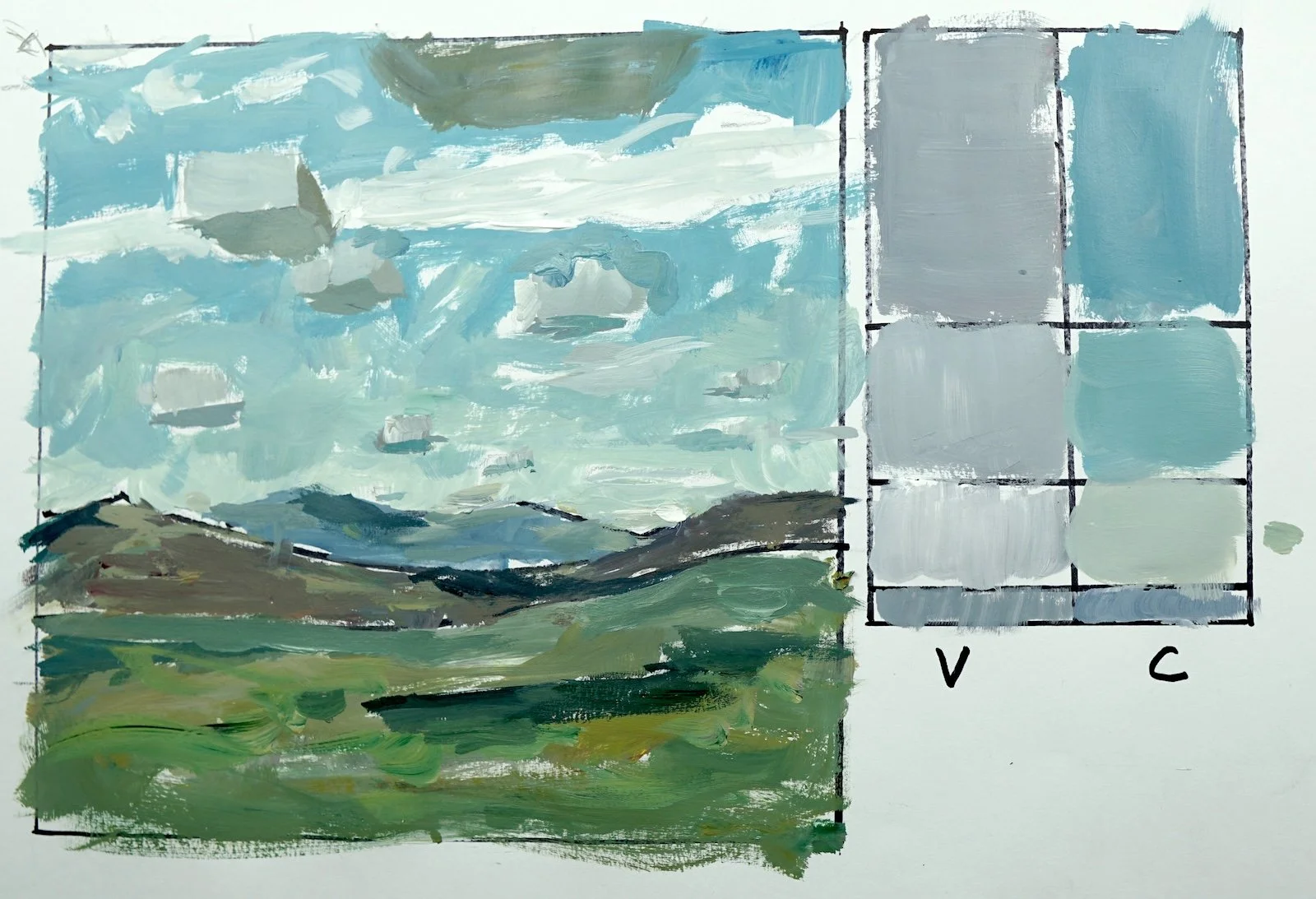
What You’ll Learn
Atmospheric perspective and depth
How color changes with distance
Trees and simplified tree structure
Sky holes and negative shapes
Cloud and sky construction
Color theory for landscape painting
Creating stronger separation between foreground, middle ground, and distance
Using temperature, value, and saturation to support depth
Applying these ideas to complete landscape studies
Inside the Course
26 lessons
5+ hours of video instruction
3 master artist analysis lessons
3 guided assignments
Robert completes all 3 assignments
In-depth demonstrations and practical landscape studies
Who It’s For
This course is ideal for artists who already understand basic landscape structure and want to improve depth, atmosphere, trees, skies, and color relationships.
It’s designed as the natural follow-up to Landscape Painting Fundamentals — Part 1.