How to Plan Awesome Watercolor Art
Stop wondering what to do next. Build a plan before the brush hits the paper.
Good watercolor paintings rarely happen because you stumbled onto the perfect subject. They come from making a series of decisions about why you're painting it, composition, values, color and how you want to approach the subject.
-
Getting Started
-
The Why
-
Example 1
See the Why in action.
-
Example 2
Working with dull image.
-
Example 3
Simple subject.
-
Example 4
Old truck.
-
Example 5
Harbor scene.
-
Final Examples
Few more and we’re done.
-
Assignment Instructions
How to complete assignment.
-
Assignment 1
Time to get to work.
-
Robert's Take
See how Robert completes assignment.
-
-
Composition Basics
-
Composition & Design Examples
-
Student Critiques
-
Value Hierarchy
-
Value Hierarchy Demos
-
Student Critiques
-
Color Harmony
-
Color Harmony Demos
-
Lone Boat Part 1
Chromatic palette
-
Lone Boat Part 2
Chromatic palette
-
Lone Boat Part 3
Chromatic palette
-
Lone Boat - Tonal
Part 1
-
Lone Boat Tonal
Part 2
-
Yellow Umbrellas Tonal
Part 1
-
Yellow Umbrellas Tonal
Part 2
-
Yellow Umbrellas Chromatic
Part 1
-
Yellow Umbrellas Chromatic
Part 2
-
Walkway Chromatic
See it come together
-
Brown Building Chromatic
See it come together
-
Brown Building Chromatic
Part 2
-
-
Critiques and Recap
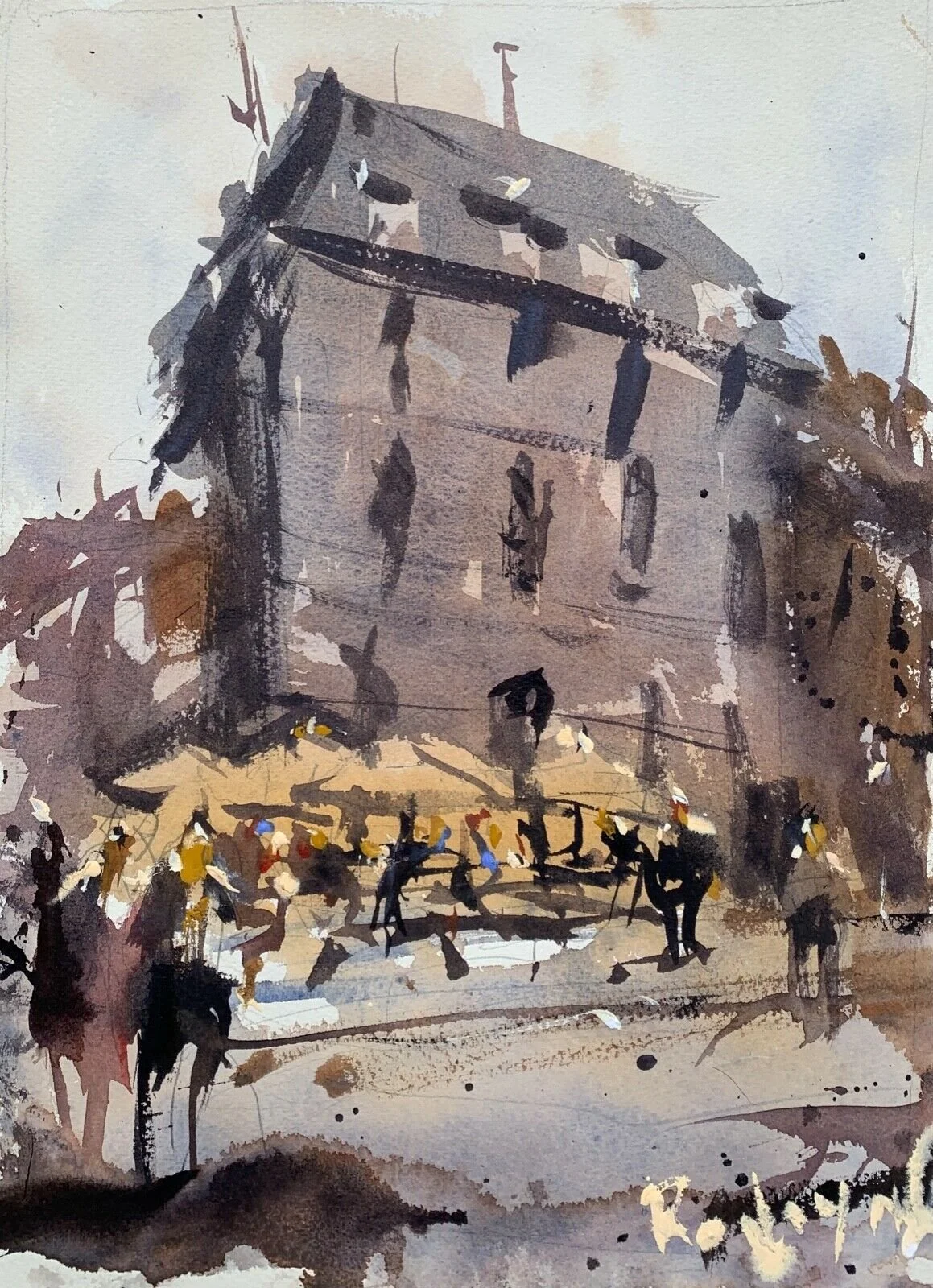
About The Course
Learn a practical four-step process for planning stronger watercolor paintings—from finding the “why” behind your subject to making better decisions about composition, values, color and approach.
Build enough structure to give yourself the freedom to paint loose.
What You'll Explore
A 4-step planning process
Finding the “why” behind your subject
Design & composition
Value hierarchy
Color harmony
Different ways to approach a subject
Step-by-step watercolor demonstrations
Assignments and student critiques
What's Inside
62 video lessons with demonstrations, exercises, examples and critiques. Work through the entire course or jump into the topics most useful to you.